St. Clair Hospital’s Dr. Hammer Sets High Standards for Stroke Treatment
By Andrew Wilson
Sometimes it starts with weakness, numbness or tingling sensations on one side of the body. Maybe one side of their face droops a bit when they smile. Other times it might be slurred words or confusion. Any or all of these symptoms can signal that a person is having a stroke and is in need of immediate care.
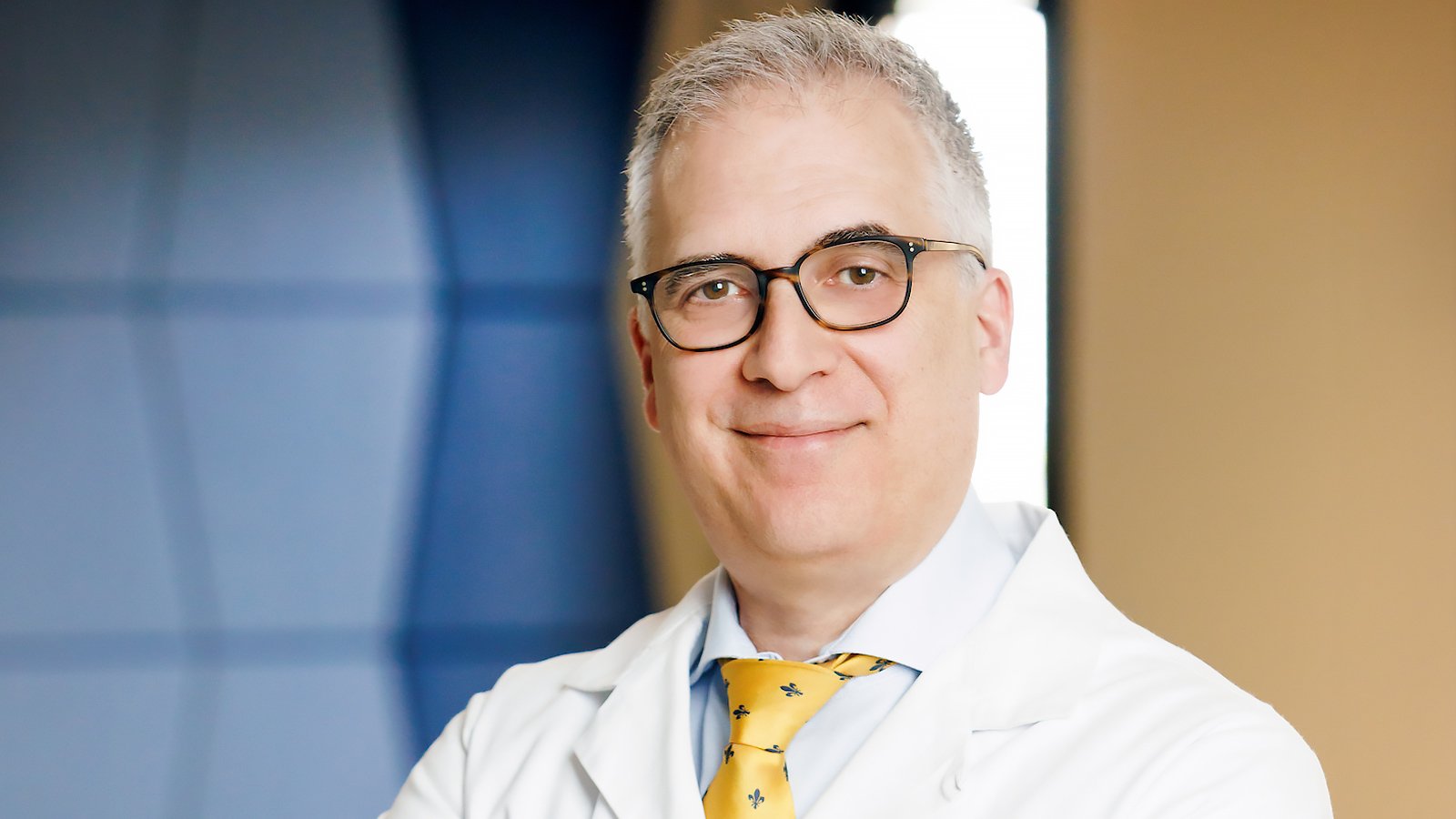
“I tell all my patients that my job is to make sure that they never have a stroke,” said Maxim Hammer, M.D., MBA, chief of neurology at St. Clair Hospital. “And I take my job seriously.”
So seriously in fact, that the Stroke Clinic at St. Clair Hospital is setting high standards for its patients. Dr. Hammer says that he often hears patients tell him that they read online that if they have one stroke, there’s a high chance of having another one. At St. Clair’s Stroke Clinic, there is less than a one percent chance of recurrence. Success of this magnitude begins with education, which most often means breaking common misconceptions.
“People generally consider a stroke to be a surprise, but they don’t realize that it is preventable,” said Dr. Hammer. “It is not random. A stroke is explainable.”
A stroke, Dr. Hammer says, is defined as a “sudden neurological deficit that is caused by a vascular problem.” Breaking that definition down to basics, the “neurological deficit” is an impairment in physical functioning – for example, weakness or numbness on one side of the body, slurred speech or confusion. “Vascular problem” refers to a blockage or bleeding in a blood vessel, although Dr. Hammer says that most times it is blockage.” And, of course, it is “sudden,” meaning one moment the person appears to be fine and the next he or she is exhibiting one of the deficits.
“Occasionally, people will have transient ischemic attacks also known as TIAs. With a TIA, the symptoms will go away in a few minutes, but it is a warning that a stroke is possible,” he said. “However, for the majority of stroke patients, there is no warning.”
To understand the causes of a stroke, a person needs to understand the risk factors that they may have. There are non-modifiable risk factors like diabetes, hypertension or high blood pressure, high cholesterol, and atherosclerosis, a disease of the arteries that causes an accumulation of fatty material along the inner walls.
But there are also modifiable risk factors like diet, smoking, alcohol consumption, and a sedentary lifestyle. Positive changes in the modifiable risk factors can lead to improvements in the non-modifiable risk factors. The challenge for the modifiable risk factors can be changing habits that have become ingrained in a person’s lifestyle.
“The challenge is different for different people. Some people may have a harder time changing one particular risk factor, but others may not have a problem with that same risk factor,” Dr. Hammer said. “Prevention is absolutely key. If I could emphasize one thing it would be for patients to ask their primary care physician to assess them for their stroke risk at their next visit and pay particular attention to their blood pressure and family history.”
Both St. Clair and Dr. Hammer share a commitment to delivering exceptional care with an understanding that addresses each patient’s individual needs and goals.
“We at the Stroke Clinic are very accessible to our patients,” he said. “Every patient of mine gets my direct contact information. Our goal is to prevent them from having a stroke.”
When It Comes to Stroke, Learn to Act F.A.S.T.
The American Stroke Association uses the acronym “F.A.S.T,” to alert the public about the signs of a stroke. Be alert to these signs:
F – Face drooping or twisting.
A – Arm weakness on one side.
S – Speech difficulty. (Either unusual struggling to find words or speaking gibberish.)
T – Time to call 911.
Some medical professionals like to use the acronym “B.E. F.A.S.T.,” with the same signs as above, but adding:
B – Sudden loss of balance or coordination.
E – Sudden vision changes or trouble seeing.
Other signs to watch for are a sudden, severe headache or confusion that occurs out of the blue. Knowing these signs and getting help quickly can save brain tissue and prevent permanent damage.
Recognized as a leader in stroke neurology, dementia and general neurology, Dr. Maxim Hammer is committed to reshaping neurological care to meet the unique needs of each patient.
At St. Clair Hospital, Dr. Hammer is bringing his broader vision for neurological care to life by expanding services, including establishing a multidisciplinary approach to treating dementia that includes psychiatry, psychology and social work. His research background in novel approaches to acute stroke care has inspired new ways to close the gap between inpatient and post-hospital care, primarily through advanced telemedicine. And he is working with the St. Clair neurology team to revolutionize care for movement disorders, including Parkinson’s disease, multiple sclerosis and epilepsy.
Dr. Hammer earned his medical degree at Albany Medical College, Albany, N.Y., and completed his neurology residency at Cleveland Clinic, where he was elected chief resident. He also completed a Vascular Neurology Fellowship at UPMC. Dr. Hammer practices with St. Clair Medical Group and sees patients at the St. Clair Professional Office Building in Mt. Lebanon.
Please call (412) 942-6300 to schedule an appointment.