
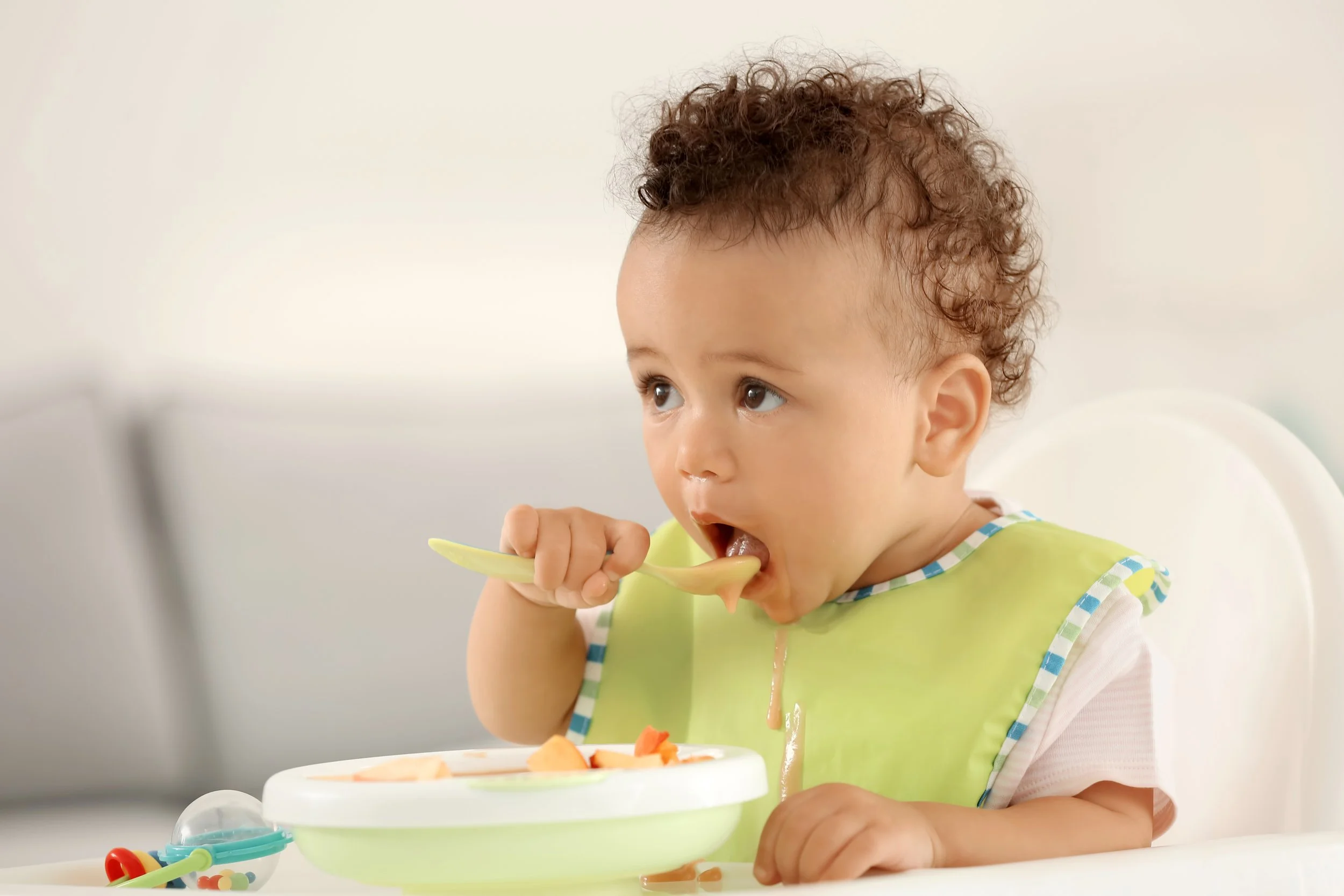
Early Exposure May Help Babies Avoid Food Allergies
Allergies to peanuts and eggs and fish are more common and more widespread than in the past. People with such allergies must check ingredients in foods and ask about components in restaurants to make sure they aren't eating something harmful. This can be especially difficult on young children who may take their lunches in school cafeterias or be invited to parties and not know what they should or shouldn't eat.
However, a Canadian study indicates that introducing babies to such items early and on a regular basis may help reduce the risk of them developing allergies. And the earlier the better. The study in JAMA Pediatrics reported that waiting until after a child is 12 months old before introducing, for example, peanuts into the diet, doubles the chance of the child developing a peanut allergy. (In the case of peanuts, which can be difficult or even dangerous for a child to eat, peanut butter may be mixed with water and stirred in with other easier-to-digest foods.)
According to the study, these foods can be introduced as soon as the child is able to eat solid foods. They should be administered in small quantities, and the child should remain awake for at least two hours so parents can monitor any reactions. Naturally, if an allergy is suspected, stop the offering and speak to a doctor.